

A full reef mooring field is a reason to change your plan, not to drop the anchor next to the boats already there. Check the exact sanctuary zone before departure and name a backup stop so you can move on without improvising around a crowded reef.
Which buoy can I use?
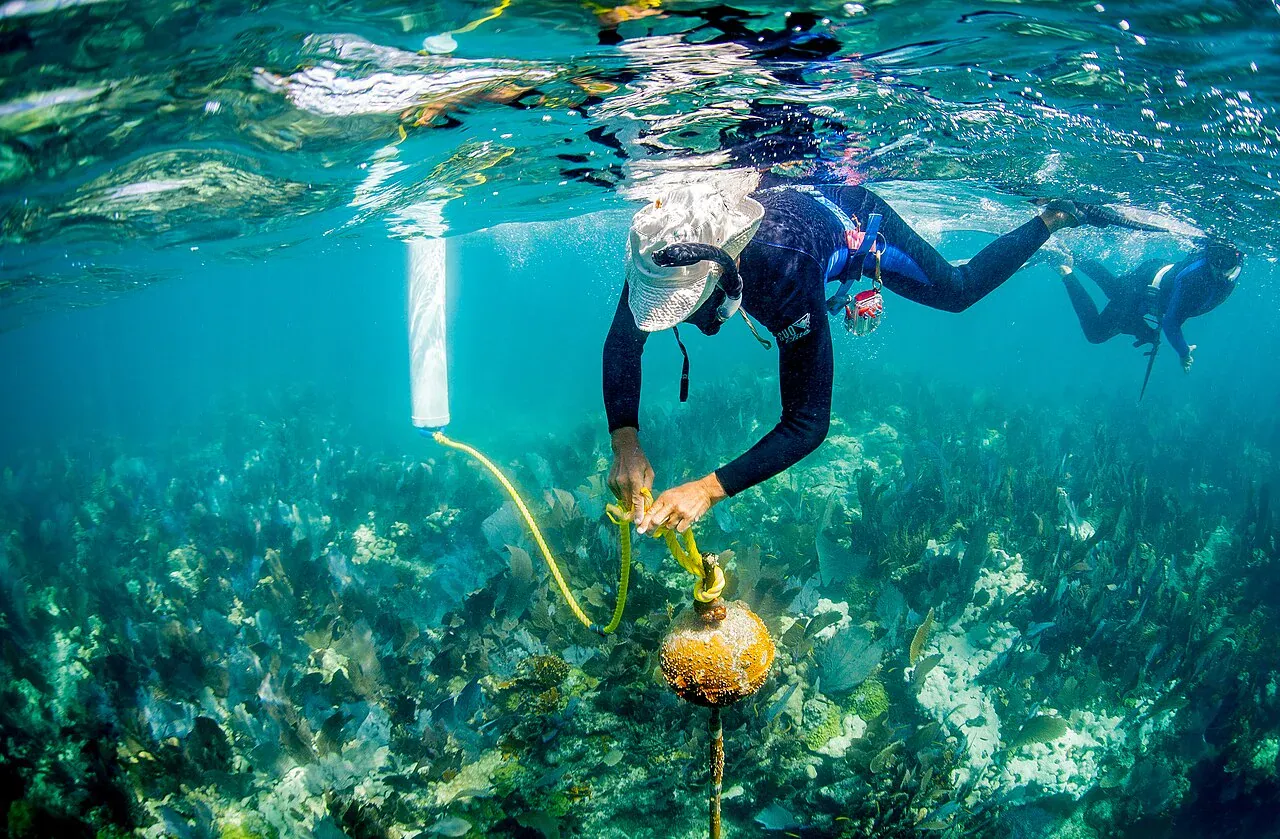
In the Florida Keys National Marine Sanctuary buoy program, a white spherical buoy with a blue stripe is a reef mooring. Those sanctuary reef buoys are first-come, first-served and free to use. NOAA designates these reef buoys for short stops, not overnight stays. Other Keys anchorages can have paid moorings. NOAA lists standard reef moorings for boats up to 59 feet and larger buoys for boats 60–100 feet at specified locations. Check the specific buoy, site and current conditions; don't assume you can use a buoy solely because the length appears to fit.
A yellow sanctuary boundary buoy marks an area, not a place to tie. Tall white spar buoys with orange markings can communicate restrictions or hazards. If you're not sure what a marker means, use the site map and don't tie to it.
A practical decision sequence
- Before leaving: Find the NOAA mooring locations for your first and backup stops. Check active rules and any access or anchoring restrictions for each site.
- At the site: Look for the correct, available mooring and inspect its pickup line from a safe position. Follow NOAA's illustrated mooring instructions and only attempt the maneuver if your vessel, crew and conditions allow.
- No suitable buoy? Don't tie up to a yellow marker, a damaged buoy or someone else's boat. NOAA prohibits anchoring on living coral. In an area where anchoring is permitted, sanctuary guidance points to sand away from coral and seagrass. If you're unsure about the zone, bottom or room to swing, go to your backup rather than guessing.
Before-trip card: Primary site _____ | Backup site _____ | Boat length _____ | Zone checked _____ | Date checked _____ | Move-on decision _____.
The buoy does not certify a safe stop or replace navigation planning. Report a damaged or missing marker through the sanctuary's buoy-program page.