

A dealer's trade-in offer can be lower than a private sale and still leave you ahead. A private sale can be the better deal too. The answer depends on the dealer's complete replacement quote, any verified tax difference, and what it costs to wait.
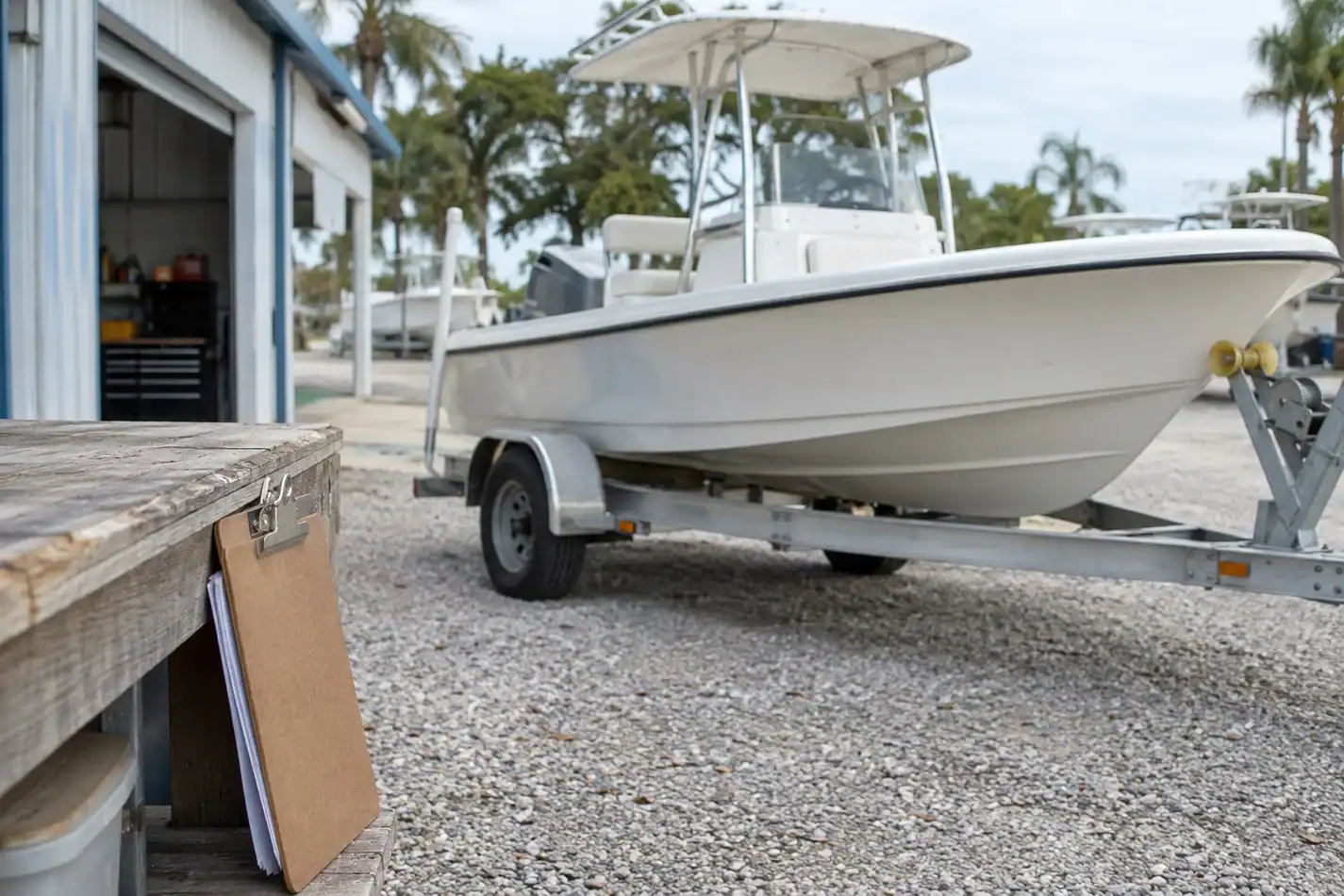
This is a worksheet for an owner who actually plans to buy a replacement. If you are simply selling the current boat, skip the trade-in comparison and calculate sale proceeds after costs and payoff.
Get two written replacement quotes
Ask the dealer to quote the same replacement boat, equipment, fees and financing assumptions with and without your trade. Make the dealer separate the trade allowance, current payoff, actual taxable amount and taxes. A bigger allowance is not better if the dealer also raises the replacement price or changes the package.
Florida's Department of Revenue says registered boat dealers and brokers may deduct a qualifying trade-in allowance from the purchase price when the trade and purchase are part of one transaction. This is not a credit you should assume for an unrelated private sale. Ask the dealer to show it in the itemized quote; do not multiply the allowance by a guessed combined tax rate.
Make the private-sale number realistic
Start with an expected realized sale price, not the highest online asking price. Deduct costs you will actually incur, such as listing, staging, transport, a broker fee if applicable and incremental holding costs until the sale. Use a lender's written payoff valid through the expected sale date. Make separate estimates for a quick sale and a slower sale rather than inventing one certain number.
One comparable example
Suppose these are two fictional, fully itemized offers for the same replacement:
Dealer trade
- Replacement price, fees and tax before trade proceeds: $31,020
- Trade allowance or expected sale price: $10,000
- Sale and extra holding costs: $0
- Old-loan payoff: $3,000
- Net old-boat proceeds: $7,000
- Net amount to fund: $24,020
Private sale then buy
- Replacement price, fees and tax before trade proceeds: $31,620
- Trade allowance or expected sale price: $12,000
- Sale and extra holding costs: $1,050
- Old-loan payoff: $3,000
- Net old-boat proceeds: $7,950
- Net amount to fund: $23,670
The private route is ahead by $350, not $2,000. The fictional $600 quote difference is already included in the replacement totals. Don't give the trade another $600 credit. If the private route incurs $350 more in costs, it ties the trade; if the expected price falls by $500, the trade is ahead by $150. The example is arithmetic, not a Florida tax quote.
Fill in your numbers
- Trade route: quoted replacement subtotal including fees and tax, excluding trade and old payoff ___ – trade allowance ___ + written old payoff ___ = ___
- Private route: quoted replacement subtotal including fees and tax ___ – expected private sale price ___ + sale/holding costs ___ + written old payoff ___ = ___
- Private route, downside: repeat using fewer proceeds and a delayed closing ___
- Earliest date each option actually frees cash ___
- Difference that would justify the extra time and uncertainty to you ___
If the lender rolls an old balance into the replacement loan, compare the new amount financed and its full terms, not just the monthly payment. Don't count the same payoff twice.
Source: Florida Department of Revenue, Sales and Use Tax on Boats. See also Florida Statutes §212.09. Confirm the tax and transaction terms with the people handling your own purchase.
Compare the process as well as the numbers: the free BoatLife365 buyer and seller kits help you collect written quotes and keep the private-sale paperwork separate.