

Start with the label, not the age on the listing. Use your child’s current weight and the fit measurements the life jacket calls for. Get a U.S. Coast Guard–approved wearable jacket labeled for the intended user and activity, then have your child try it on with all fasteners closed before you leave for the water.
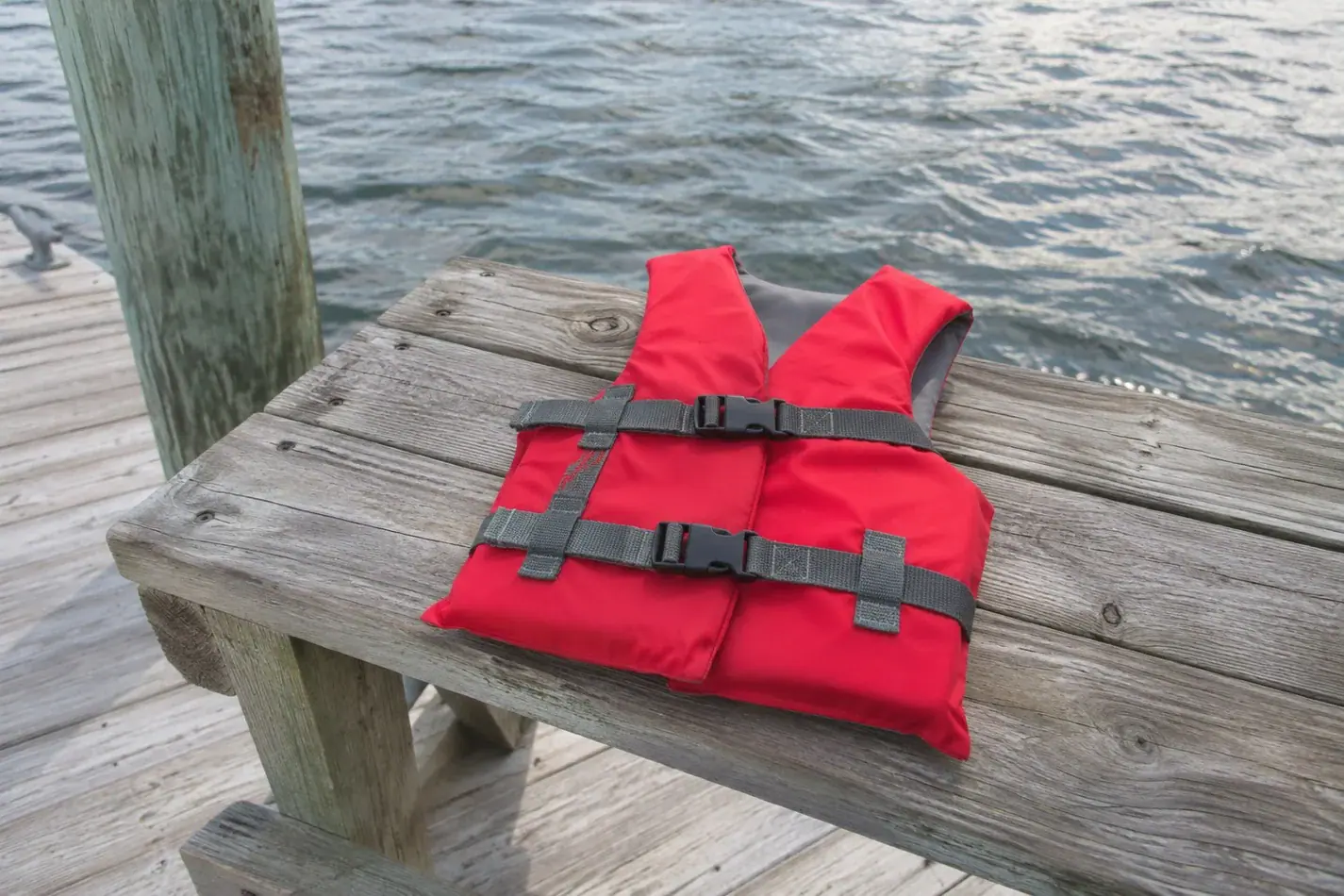
A “youth” label or a picture that looks about right isn't a fit check. A foam jacket that's too big can ride up. A child who has outgrown a jacket needs the next correct fit, not simply the next number on a shopping page.
Take these three measurements to the store
- Current weight, not a guess or last spring’s weight. Compare it with the approval label. Weigh at home first so you can take several options off the rack without relying on the shelf tag.
- Chest measurement if the product specifies it. Follow the manufacturer’s measuring instructions. If it lists both chest and weight, verify both.
- What your child is doing. A day on a pontoon, a personal watercraft and a tow-sports session aren’t necessarily the same use. Read the approval label for allowed activities and any limits for the wearer. For a child, start by trying properly labeled, inherently buoyant foam options.
Source: U.S. Coast Guard: life jacket fit and wear.
Do the try-on before you pay
Close the zippers, buckles and any retention strap the model uses, then adjust it according to the directions. The Coast Guard’s guidance for foam jackets is a snug fit that does not rise above the wearer’s chin or ears. If it rides up that far, cannot be adjusted snugly, interferes with movement or can’t be worn as directed, try another size or design. Movement and comfort matter because the jacket has to stay on.
Before relying on a new jacket, follow the manufacturer’s fitting and buoyancy guidance. If the guidance calls for trying it in water, make that a controlled, closely supervised fit check, not an experiment in a current or from the boat. A jacket is not a substitute for active supervision.
Florida: buying and wearing are two different decisions
Florida Statutes §327.50 requires people under 6 aboard a vessel less than 26 feet on Florida waters to wear a currently Coast Guard–approved PFD as the approval label directs while the vessel is underway. The Coast Guard's boating FAQ explains the federal child-wear rule, exceptions and how state requirements can govern on waters subject to state jurisdiction. Check the rules for the waters you’ll use rather than treating Florida's age or length as a nationwide rule. Regardless of minimum legal requirements, put a correctly fitted jacket on your child before getting on the water.
Screenshot this before shopping
- Child’s current weight: ______
- Chest size if needed: ______
- Planned activity: ______
- Approval label and permitted use checked: □
- Snug when fastened, without rising above chin or ears: □
- Manufacturer’s fit instructions completed: □
I’d take a photo of the approved label once you've chosen a jacket. Next season, check the child's size again and inspect the jacket before the first trip. If visiting more than one lake or bringing friends, make a separate fit check for each child.