

One scale number cannot answer “can I tow this?” Check the actual loaded vehicle, individual axles, combined rig, trailer and tongue load against the limits for your exact equipment. A brochure's dry boat weight, the number on the trailer tires or an advertised maximum tow rating alone doesn't settle it.
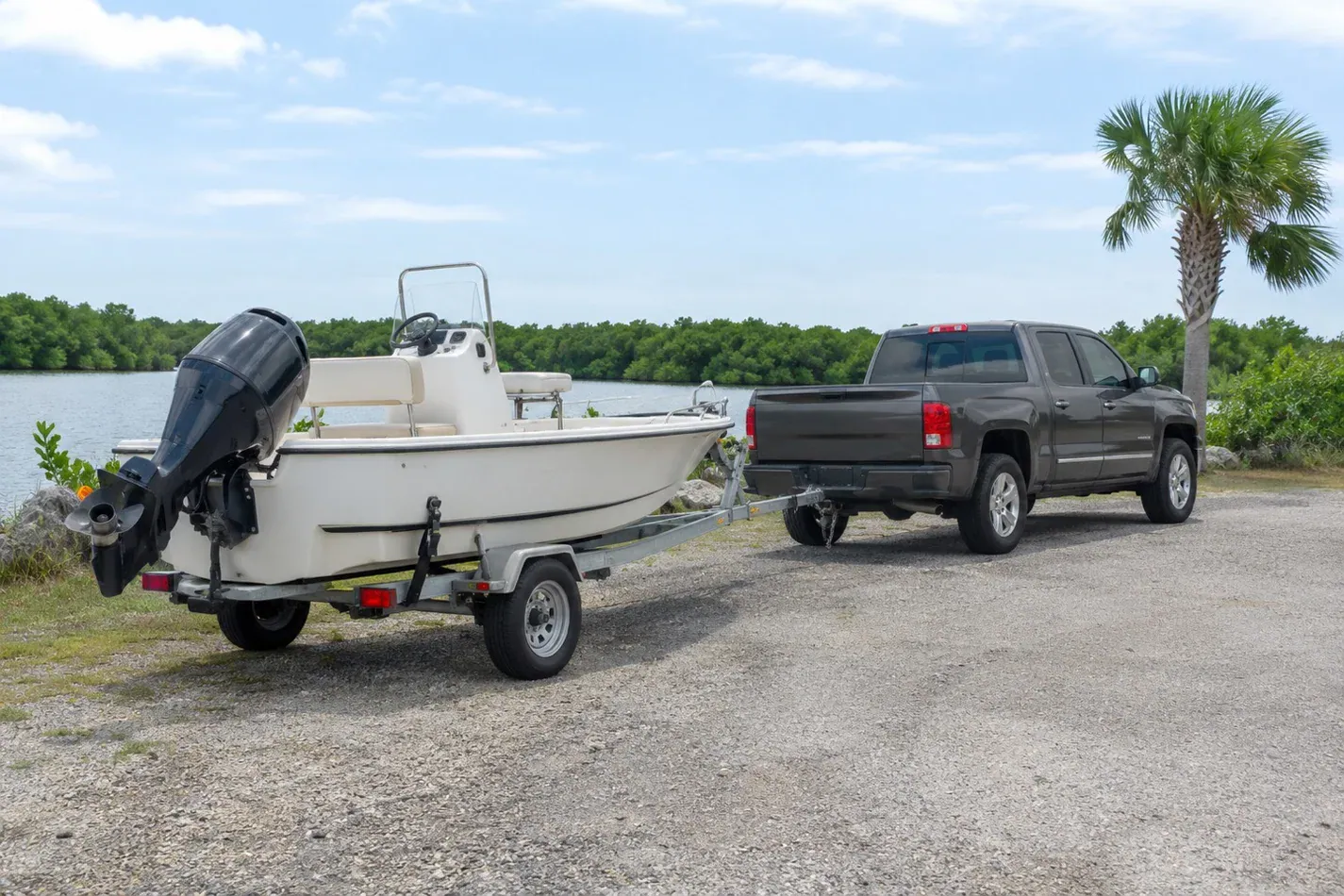
1. Record the limits before comparing
Use the tow-vehicle door labels and the manual or manufacturer towing guide for the exact year, engine, axle, cab and equipment. Read the separate labels/manuals for the trailer, hitch assembly and tires. If in doubt, confirm the exact configuration with the vehicle and trailer manufacturers or a qualified towing shop.
For each item, record where you found it and the exact limit.
- Tow vehicle GVWR: maximum loaded vehicle weight
- Tow vehicle front and rear GAWR: maximum per axle, record separately
- GCWR: maximum combined vehicle and trailer weight
- Maximum loaded trailer weight for this vehicle and configuration
- Trailer GVWR and each trailer axle rating
- Allowed tongue load range for this trailer, and upper limits for vehicle and hitch hardware
- Applicable receiver, ball mount, ball and coupler limits
- Manufacturer-required tire/wheel ratings and recommended pressure
Ford’s towing guide illustrates why published limits depend on configuration and why passengers, cargo and tongue load matter. Its numbers are not ratings for your setup, and you should not import a generic tongue-weight target into an individual boat/trailer configuration.
2. Get actual weights in expected trip condition
Use a qualified scale operator and the manufacturers’ procedures. Load the boat and trailer with the expected fuel and gear. Account for people and cargo in the tow vehicle as directed by the scale operator. No one should ride in the boat while it is being towed. Get individual axle loads where possible. Ask a qualified shop to establish trailer gross weight and tongue load with the proper equipment; don't invent a reading by guessing dry weights or trying to uncouple on a public scale.
For each check, record the actual reading, applicable limit and the difference (limit minus actual).
- Coupled tow-vehicle front axle
- Coupled tow-vehicle rear axle
- Coupled tow vehicle overall (front + rear)
- Each loaded trailer axle or wheel-position load as required
- Total loaded truck and trailer combined
- Loaded trailer alone (includes load carried through tongue)
- Tongue load (compare with the specified range and applicable maxima)
Do not add the measured tongue load to scale totals that already include it. A trailer axle total by itself does not count the weight supported at the hitch. Verify if a distribution hitch or additional equipment changes how the measurement should be taken.
3. Read it before you tow
Example only: If the vehicle documentation and hitch establish a 500 lb max at the lowest applicable tongue-load limit, and your qualified measurement is 540 lb, that is 40 lb over on that check even if the combined scale weight is below the combined limit. Stop there and get professional guidance; don't treat headroom on one limit as permission to exceed another.
- If a limit or measurement is missing, mark unknown. Don’t tow on an unverified setup simply because the other rows look fine.
- If any requirement is missed or measurements conflict, have the setup reviewed before towing. Repeat checks when the vehicle, trailer, load or hitch setup change. Do not change load placement blindly to make a single number fit.
- A completed weight sheet doesn't replace verification of the hitch setup, trailer brakes, tires, applicable laws, launch conditions or driver readiness.
Save with your scale ticket: note the date, trip load, vehicle and trailer, and scale operator. Keep the completed worksheet and any equipment identifiers private.
If you also need a spare, take measurements from the actual trailer and use the boat-trailer spare tire fit guide.