

A spare can have the same size printed on the sidewall as the wheels on your boat trailer and still not fit. The size describes the tire. It doesn’t tell you which hub the wheel fits, whether it clears the brake assembly or whether the wheel and tire carry the required load.
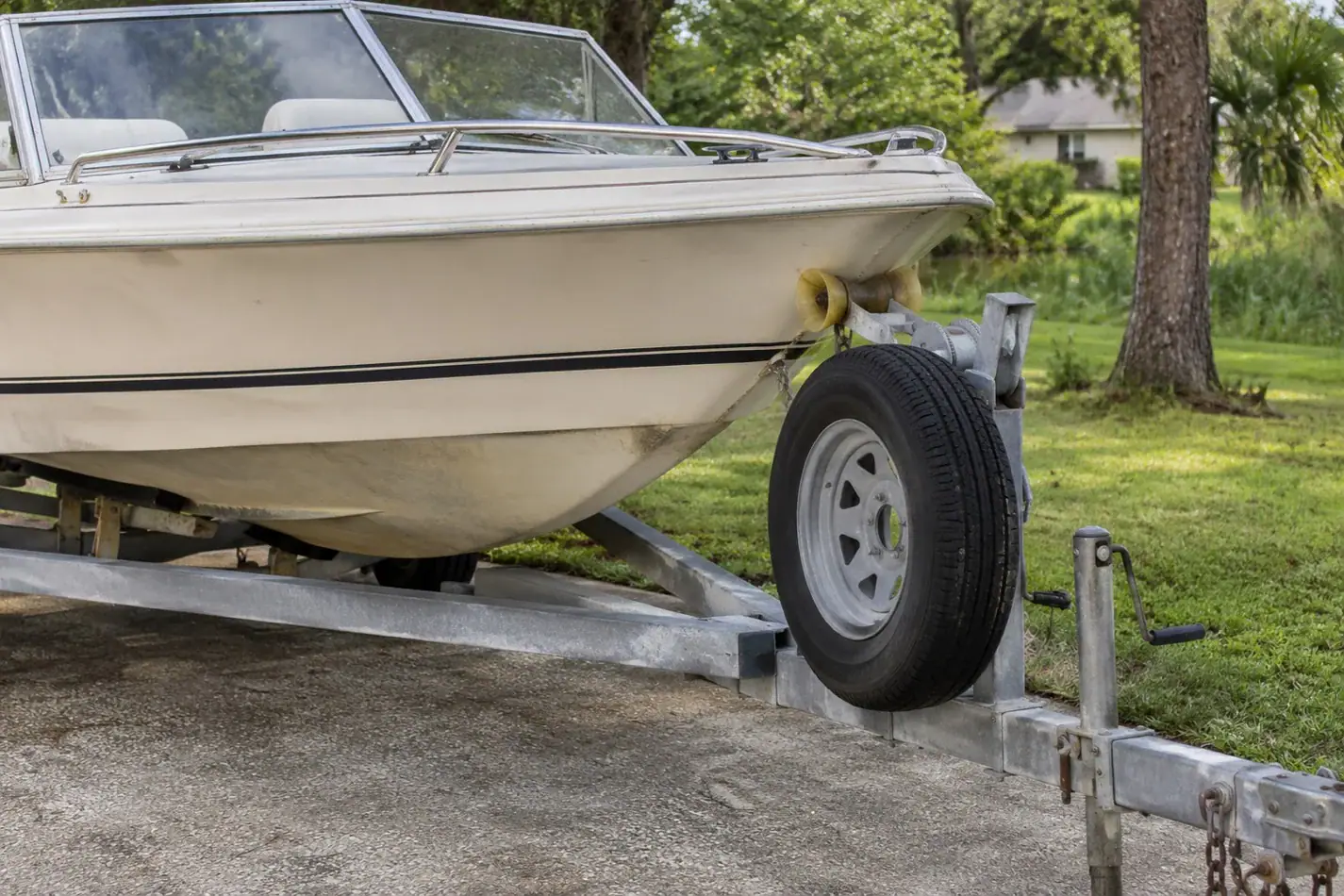
Before ordering a mounted spare, find your trailer’s tire or certification label and its owner’s manual. Photograph the label and the markings on an existing wheel, then confirm the replacement specification with the trailer manufacturer or a trailer tire shop. On a used trailer, treat the tire currently installed as a clue, not proof of the correct fit.
1. Copy the tire specification from the trailer
Write the exact size, load range or load index, and cold pressure specified for your model. Copy every character. For example, ST205/75R14 is a sample size code, not a recommendation for your trailer. The pressure molded into a tire sidewall is not a substitute for the recommended cold pressure on your trailer’s label. If the label is illegible, ask the manufacturer or dealer to identify the original specification by model or VIN.
NHTSA TireWise explains why to check recommended pressure cold, as well as the spare’s pressure and condition.
2. Confirm the complete wheel pattern
A mounted spare has to match the hub. Count the studs, then confirm the bolt-circle diameter. “Five-lug” by itself is not a bolt pattern. Also ask about the center opening, offset, wheel width and lug-seat type when ordering. A shop can measure them if the numbers aren’t in the manual.
One useful check: ask the seller to name the trailer or exact hub the wheel is compatible with. If the answer is only “14-inch trailer wheel,” keep checking.
3. Check the ratings for both the wheel and the tire
The tire and wheel are two separate parts with their own ratings. Confirm that both meet the trailer manufacturer’s requirements for the wheel position where the spare may be used. The wheel must also support the specified inflation pressure. Do not divide the boat’s dry brochure weight by the number of tires and buy to that number: the rig also carries the trailer, fuel and gear, and the load is not necessarily distributed equally. A Dexter technical bulletin hosted by NHTSA notes that the heaviest wheel position matters where distribution is unequal.
4. Confirm clearance at the hub and under the fender
The spare needs room around the hub, brake assembly, fender and suspension. Ask whether the wheel clears your brakes and is compatible with the correct lug hardware. Also confirm fit on every axle or wheel position you expect it to serve. If you’re changing tire size, wheel construction or offset instead of replacing like for like, run the specific change by the trailer maker or a qualified shop before ordering.
5. Make sure you can reach the spare and call for help
Confirm the carrier accepts the wheel, can support its weight and leaves enough clearance for the trailer to turn and move. Check the spare for damage, age and cold pressure before a trip. Know where the wheel-lock key is, if there is one, and keep your roadside number handy. If the trailer is disabled where you can’t work safely, get to safety and arrange assistance rather than attempting a roadside wheel change.
Related: Does boat towing coverage include your trailer? · Boat trailer wheel-bearing maintenance
Take this question to the tire counter
Can you match this wheel and tire to my trailer’s specification, confirm the wheel and tire load ratings, and verify hub and brake clearance for the position where it might go?
Bring the placard photo, any model or axle information, and the fit card below. Keep your VIN and other numbers private except when sharing directly with the dealer or manufacturer for verification. Don’t buy until the unanswered fields that affect fit are resolved.
Boat trailer spare fit card
Use one card per trailer. Record the required specification from the label, manual or dealer rather than relying on the parts currently installed.
- Trailer make, model and year: ______
- Axle, hub or brake model if required: ______
- Exact tire size and type; load range/index and required rating: ______
- Recommended cold pressure: ______
- Wheel diameter and width; lug count and bolt-circle diameter: ______
- Center opening, offset and lug-seat type: ______
- Wheel load and pressure ratings: ______
- Axle positions and brake, fender and suspension clearance: ______
- Carrier fit; location of wheel-lock key if used: ______
- Supplier’s confirmed part number and verification date: ______
This card records a fit check; it does not establish compatibility on its own.